
For Honor
2017 · Ubisoft Montreal, Ubisoft Quebec, Ubisoft Toronto, Blue ByteUbisoft Connect
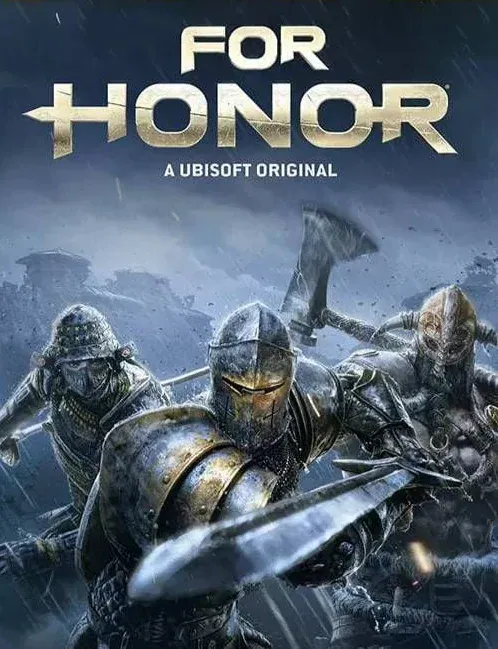
A unique medieval combat experience featuring innovative directional fighting mechanics, intense duels and large-scale faction warfare.
- My rating
- /10
- Status
- Occasional
- Rank reached
- None
- Playtime
- 104.5 h
My take
Personal review of For Honor
For Honor is one of the most unusual and ambitious projects Ubisoft has ever developed. In my opinion, it deserves special recognition for practically creating a genre of its own, introducing a combat system so distinctive that it has very few, if any, true equivalents in the gaming industry. This isn't simply a medieval action game or a fighting game featuring characters armed with swords. It's an experience that combines elements from several different genres to create an incredibly recognizable identity.
The true star of the experience is undoubtedly the Art of Battle system, one of the most interesting and innovative gameplay concepts Ubisoft has ever introduced. The ability to directly control the direction of attacks and guards, alongside parries, feints, counters and defensive openings, transforms every encounter into a technical and psychological battle. Knowing your character's moveset isn't enough: you must learn to read your opponent, anticipate their intentions, recognize their habits and constantly adapt your approach. It's a formula that rewards mechanical knowledge, precision and the ability to remain composed under pressure.
And this is precisely what makes For Honor so difficult to compare with other games. Every duel can become a game of chess, where a single mistake can determine the outcome of an entire encounter. Successfully reading an opponent, countering their offensive strategies and finding the perfect opportunity to strike back is an incredibly satisfying experience that I find difficult to replicate elsewhere. It's a system that demands time, dedication and a fair amount of initial frustration, but rewards those willing to master it.
The roster is another major strength. Choosing between Knights, Vikings and Samurai at launch, later joined by Wu Lin and Outlanders, allows players to explore vastly different fighting styles, each featuring distinctive weapons, animations, abilities and visual identities. The variety of Heroes adds considerable depth to the experience, providing countless possibilities and encouraging experimentation. Choosing a character isn't simply about finding one that looks appealing; it's about discovering the fighter that best suits your personal approach to combat.
In terms of game modes, For Honor offers a fairly comprehensive selection of experiences. Duels are arguably the purest expression of its combat system, placing two players directly against each other without distractions. Team-based modes such as Dominion introduce a broader strategic dimension, where objective control, resource management and teamwork become essential. Breach, with its sieges and large-scale battles, adds another layer of variety and delivers a much more spectacular representation of medieval warfare.
Its visual and audio presentation also deserves recognition. The combat animations, weapon impacts, executions and sheer brutality of its encounters make every battle incredibly engaging. Ubisoft successfully created a recognizable medieval fantasy setting in which every faction has its own personality and every Hero communicates their fighting style through movement, equipment and animations.
The single-player campaign, while not necessarily the highlight of the entire production, provides an interesting introduction to the conflict between the different factions and allows players to familiarize themselves with the fundamental mechanics. However, it's in the multiplayer component that For Honor truly reaches its full potential.
Another aspect I particularly appreciate is its post-launch support. Despite a difficult launch, plagued by connectivity issues, technical shortcomings and initially inconsistent balancing, Ubisoft continued investing in the project for years. New Heroes, maps, game modes, updates, combat system revisions and quality-of-life improvements gradually transformed the experience, significantly expanding its content and keeping it alive far beyond its initial expectations. The fact that the game is still receiving support nearly ten years after its original release is a remarkable testament to its longevity.
Of course, the experience isn't without its flaws. Hero balancing hasn't always been consistent, certain mechanics can be frustrating and the learning curve is particularly demanding, especially for newcomers without any previous experience. Networking and connectivity issues have also been recurring concerns throughout its history.
Nevertheless, these shortcomings cannot overshadow what For Honor actually achieved. It's one of those games that demonstrate the importance of experimentation, taking creative risks and having the courage to introduce something genuinely different rather than simply reinterpreting established formulas.
For me, For Honor is an extraordinary project, a competitive experience with an almost unmatched identity and a combat system that deserves recognition as one of Ubisoft's most successful experiments. A game that carved out its own place in the industry and, despite its initial difficulties, managed to build an incredibly dedicated community.
It's difficult to find anything genuinely comparable to For Honor. And that, perhaps, is its greatest achievement.