
Action · Looter Shooter · Open World · RPG · Shooter · Third Person
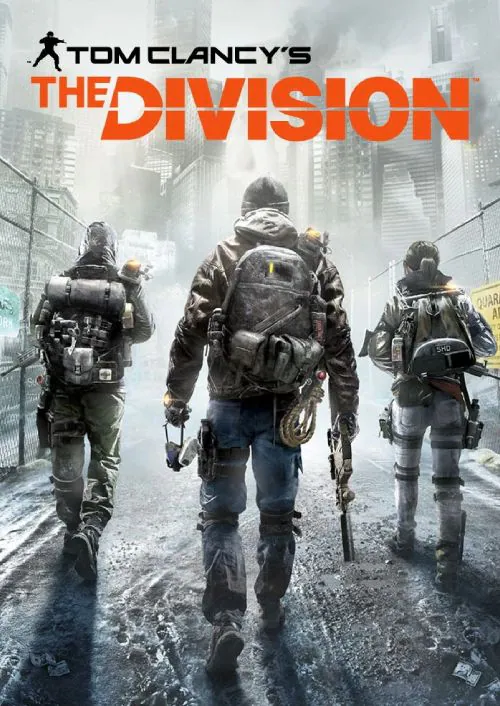
Tom Clancy's The Division
2016 · Massive EntertainmentUbisoft Connect
A third-person looter shooter set in a post-pandemic New York, featuring tactical combat, deep RPG progression, extensive customization and intense PvPvE encounters.
- My rating
- /10
- Status
- Completed
- Completion
- 100%
- Playtime
- 165.5 h
My take
Personal review of Tom Clancy's The Division
Tom Clancy's The Division is one of those games that, even years later, I still consider among the most interesting and satisfying experiences I've ever had in the looter shooter genre. Despite its massive commercial success at launch, it gradually faded from the spotlight, particularly when compared to other titles that would eventually dominate this segment of the industry.
The first thing that completely won me over was undoubtedly the setting. Massive Entertainment's recreation of New York City is simply outstanding: a metropolis devastated by a pandemic, covered in snow and slowly descending into chaos. Its atmosphere is one of the game's greatest achievements, supported by exceptional art direction and environmental storytelling that communicates so much without constantly relying on dialogue or cinematic sequences. Walking through Manhattan's streets, exploring abandoned buildings and discovering the remnants of a collapsed society remains a remarkably immersive experience.
Gameplay is naturally at the heart of the experience. The Division combines cover-based third-person shooting with RPG mechanics and a progression system built around weapons, gear, statistics, skills and talents. This combination is what makes the game so addictive: finding better weapons, refining your build, experimenting with different gear combinations and seeing your agent become progressively stronger is incredibly rewarding. Its loot system can be almost compulsive, but that's precisely one of the aspects that made me fall in love with it.
The Dark Zone deserves special recognition, arguably being one of the most interesting and successful concepts in the entire game. Sharing an environment with other players while simultaneously fighting AI-controlled enemies and potentially hostile agents creates a unique sense of tension. Collecting valuable equipment and successfully extracting it without being betrayed by other players leads to unpredictable encounters and some of the most memorable moments the game has to offer. In my opinion, it remains one of the most interesting interpretations of PvPvE gameplay. It is also widely cited as one of the earliest precursors of the extraction shooter genre, arriving before Escape from Tarkov built an entire game around the same risk-and-reward loop.
Cooperative gameplay is another major strength. Taking on missions alongside other agents, coordinating abilities and building squads with different specializations makes combat even more satisfying. Experimenting with different builds and finding your own role within a team adds another layer of depth to an already enjoyable combat system.
Of course, The Division's journey wasn't without its problems. Its launch was accompanied by several technical issues, balancing problems and, most importantly, an endgame that initially struggled to deliver on the ambitious promises of the project. Once players reached the level cap, progression and available activities weren't always compelling enough to maintain long-term engagement. This contributed to declining player satisfaction and the gradual loss of visibility that affected the game during its early lifecycle.
Fortunately, Massive Entertainment didn't abandon the project. Through substantial updates and continuous improvements to its core mechanics, The Division gradually became a much more complete experience, reaching a particularly satisfying state with Update 1.8. I believe this evolution deserves recognition: a game that initially struggled to fulfil its potential but eventually grew into something considerably better.
The expansions also played a major role in this transformation. Underground introduced procedurally generated missions set beneath Manhattan, Survival offered an entirely different experience built around surviving in extreme environmental conditions, while Last Stand introduced a new team-based competitive mode. Among them, I particularly appreciate Survival, which remains one of the most interesting and original additions to the entire package. It perfectly complements the game's atmosphere and world design.
What I find unfortunate is how little recognition The Division receives today compared to what it deserves. It was one of the titles that helped shape and establish the modern looter shooter genre, offering a distinctive combination of shooting mechanics, RPG progression, cooperative gameplay and PvPvE encounters.
It certainly isn't perfect, and some of its shortcomings are particularly evident when looking back at its early days. Nevertheless, it remains a game I genuinely enjoyed and one that I believe has a very distinctive identity.
The Division is a game I would still recommend to anyone who enjoys looter shooters. An immersive and incredibly rewarding experience that, in my opinion, deserves considerably more appreciation than it currently receives.