
Action · Adventure · First Person · Open World · Shooter
Far Cry Primal
2016 · UbisoftUbisoft Connect
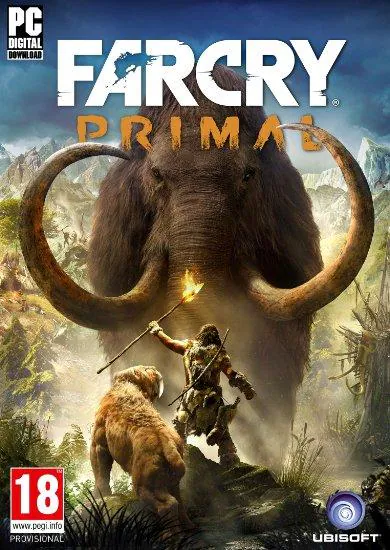
The award-winning Far Cry franchise returns with its innovative open world gameplay, bringing together massive beasts, breathtaking environments, and unpredictable savage encounters. Welcome to the Stone Age, a time of danger and adventure.
- My rating
- /10
- Status
- Completed
- Completion
- Main story + side quests
- Playtime
- 17 h
My take
Personal review of Far Cry Primal
Far Cry Primal is arguably one of Ubisoft's most interesting and successful experiments, as well as one of my favorite entries in the franchise. Its greatest strength is undoubtedly its setting: bringing the Far Cry formula into prehistoric times was an incredibly bold decision that resulted in an experience with an identity entirely different from the other installments.
Set around 10,000 BC, the game puts players in the shoes of Takkar, a hunter from the Wenja tribe who must survive in the untamed valley of Oros and reunite the scattered members of his people. It is a world dominated by enormous animals, deadly predators and rival tribes, where humanity is no longer necessarily at the top of the food chain.
The reconstruction of this prehistoric world is undoubtedly the game's greatest achievement. Oros is a breathtaking environment featuring lush forests, swamps, snowy mountains, caves and vast plains populated by prehistoric creatures. Woolly mammoths, sabertooth tigers, cave bears and numerous other species contribute to an incredibly fascinating ecosystem. Exploration feels particularly meaningful because the world is not simply a backdrop to travel through, but a hostile environment where almost every encounter can become a threat.
I also greatly appreciated the attention given to the audio and linguistic aspects. Ubisoft collaborated with linguists to develop prehistoric languages specifically for the game, including Wenja, making interactions considerably more immersive and reinforcing the cultural identity of its different tribes. It is an artistic decision that works exceptionally well.
Another outstanding addition is the Beast Mastery system, which allows players to tame various animal species and use them during exploration and combat. Having a sabertooth tiger or a cave bear fighting alongside you completely changes the approach to encounters and represents one of the most enjoyable mechanics in the entire experience. The owl, which can be used to scout enemy positions from above, also fits perfectly within the prehistoric setting.
Naturally, the gameplay retains much of the traditional Far Cry structure: enemy outposts, resource gathering, crafting, skill progression and side missions. Some activities inevitably become repetitive, and the combat system, primarily based on bows, spears and clubs, offers less variety than entries set in modern times. The narrative, while interesting, also falls short of the strongest installments in the franchise.
Nevertheless, these shortcomings never truly undermine what I consider Far Cry Primal's greatest achievement: its ability to transport players into a historical period rarely explored by video games with such attention to atmosphere and world-building. The feeling of inhabiting a primitive world where hunting, exploration and survival are essential aspects of everyday life is something I genuinely appreciate.
To me, this is much more than Far Cry with bows and spears. It is an experience with an incredibly strong identity, a remarkable setting and an artistic direction that remains particularly memorable even today.