
Action · Adventure · First Person · Open World · Shooter
Far Cry New Dawn
2019 · Ubisoft Montreal, Ubisoft Kyiv, Ubisoft ShanghaiUbisoft Connect
Dive into a transformed vibrant post-apocalyptic Hope County, Montana, 17 years after a global nuclear catastrophe. Lead the fight against the Highwaymen, as they seek to take over the last remaining resources.
- My rating
- 6.0/10
- Status
- Completed
- Completion
- Main story + side quests
- Playtime
- 22 h
My take
Personal review of Far Cry New Dawn
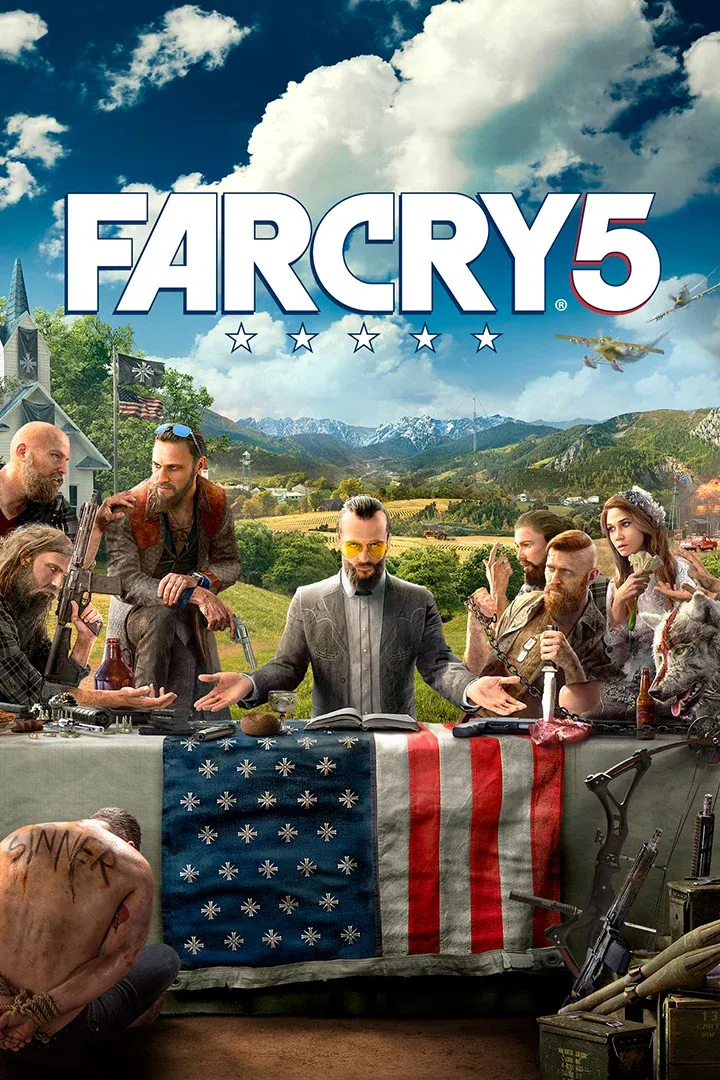
Far Cry New Dawn is one of those games I would probably have preferred never to see made in the first place. I wouldn't consider it a bad game in absolute terms, but rather an unnecessary spin-off that fails to fully justify its existence. More importantly, especially after thoroughly enjoying Far Cry 5, it left me feeling rather disappointed.
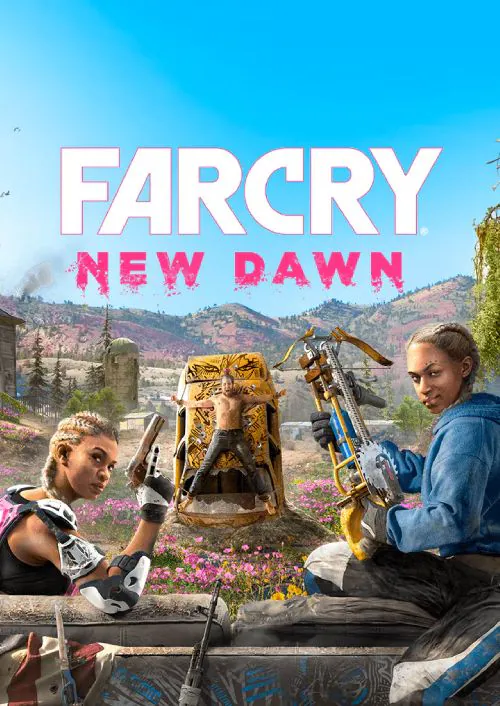
The idea of returning to Hope County 17 years after the events of the fifth installment was certainly interesting. Revisiting familiar locations, transformed by a nuclear catastrophe and gradually reclaimed by nature, is undoubtedly one of the project's strongest aspects. The art direction is distinctive, featuring a vibrant color palette, lush vegetation and an interesting contrast between the natural landscape and the Highwaymen's makeshift structures. However, as visually appealing as this transformation may be, it isn't enough to make a map I had already explored extensively feel interesting all over again.
The narrative didn't convince me either. Mickey and Lou, the two main antagonists, simply lack the charisma needed to carry the entire story. Their characterization feels rather superficial, and their presence throughout the campaign never has quite the impact it should. Several reviews have pointed out this very issue, highlighting how little attention is given to the two antagonists and how ultimately forgettable the story turns out to be.
One genuinely interesting element, however, is the return of Joseph Seed, which provides an opportunity to explore some of the consequences of the events in Far Cry 5. This is arguably one of the most significant narrative connections to its predecessor, although I would have liked to see it explored in considerably greater depth.
On the gameplay front, Ubisoft introduced several changes, but not all of them are particularly convincing. The weapon rarity and enemy level systems introduce RPG mechanics that, personally, I don't think suit the traditional Far Cry formula very well. Having to rely on higher-level weapons to deal with certain enemies makes some encounters feel artificially difficult, encouraging resource farming and equipment upgrades rather than allowing combat to flow naturally.
Crafting, upgrading Prosperity and the ability to replay outposts at increasingly higher difficulty levels are interesting additions on paper, but they don't fundamentally change the overall experience. Expeditions are probably among the few genuinely enjoyable new features, offering the opportunity to explore locations outside Hope County and providing some welcome environmental variety.
The biggest issue, however, remains the feeling of playing a stripped-down and reworked version of Far Cry 5. The campaign is considerably shorter, many activities feel familiar, and the new additions aren't significant enough to justify another standalone installment. Several reviews from the time also described it as a limited-scope sequel, closer in nature to an expansion than a fully-fledged new entry in the franchise.
Ultimately, Far Cry New Dawn is a spin-off I consider largely unnecessary. Despite some interesting ideas and a visually successful reinterpretation of Hope County, it lacks a strong identity, memorable antagonists and meaningful innovations. I would have much preferred seeing this content developed as an expansion to Far Cry 5 rather than released as a standalone product.