
Action · Adventure · Open World · Stealth · Third Person
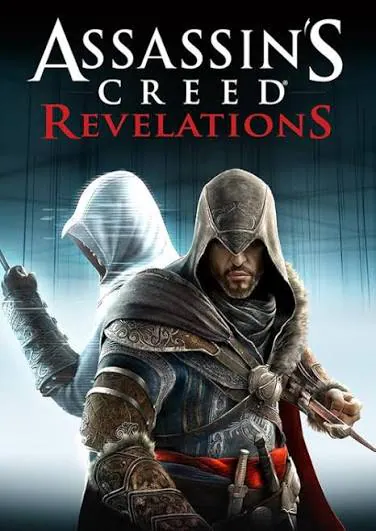
Assassin's Creed Revelations
2011 · Ubisoft MontrealUbisoft Connect
Follow an older Ezio Auditore on his journey to Constantinople, where he uncovers the secrets of Altaïr and the Assassin Brotherhood. Experience the emotional conclusion of Ezio's story in this historical action-adventure.
- My rating
- 8.5/10
- Status
- Completed
- Completion
- Main story + side quests
- Playtime
- 22 h
My take
Personal review of Assassin's Creed Revelations
Assassin's Creed Revelations marks the conclusion of Ezio Auditore's journey and, more importantly, the chapter that finally brings the entire trilogy into perspective. After witnessing his transformation from a young Florentine nobleman into a Master Assassin, seeing him return as an older, wiser man shaped by his past experiences gives this adventure a noticeably different narrative dimension.
The setting is one of the game's greatest strengths. Constantinople, at the heart of the Ottoman Empire, provides a fascinating backdrop filled with oriental architecture, bustling markets, mosques and breathtaking scenery. The city has a distinctive identity and offers a refreshing contrast to the Italian settings featured in previous installments. Its art direction also plays a major role in creating an atmospheric world that is genuinely enjoyable to explore.
The real highlight, however, is the narrative. The connection between Ezio's journey and Altaïr's legacy is one of the most interesting aspects of the entire franchise. Exploring the past of the legendary Mentor and uncovering the events that helped shape the Assassin Brotherhood is particularly rewarding. I also appreciate how Ezio is portrayed as a much older and more reflective character, far removed from the impulsive young man we first encountered. His desire to understand the past, find answers and give meaning to his existence makes this adventure considerably more introspective. The conclusion of his journey is undoubtedly one of the trilogy's most meaningful narrative moments.
Gameplay-wise, Revelations does not introduce particularly revolutionary changes, but it adds several interesting mechanics. The Hookblade, for instance, improves traversal fluidity and introduces additional possibilities during parkour sequences. Bomb crafting also provides a reasonable degree of customization, allowing players to experiment with different approaches during missions. The ability to defend Assassin dens against Templar attacks is another interesting concept, although the tower defense sequences are not particularly successful and feel somewhat disconnected from the franchise's traditional gameplay.
The main shortcomings come from the feeling that, in several respects, the game reuses much of what was already established in Brotherhood. Mission design offers few meaningful innovations, combat remains largely unchanged and certain activities eventually become repetitive. Desmond's sequences, while relevant to the overarching narrative, can also occasionally interrupt the adventure's pacing.
The soundtrack deserves special recognition, as it contributes significantly to the game's identity and beautifully complements its most important narrative moments.
Ultimately, Assassin's Creed Revelations is a particularly important entry in my view, mainly because of its narrative significance and the way it concludes the journey of one of the franchise's most beloved protagonists. It may not reach the same heights as Assassin's Creed II, nor does it represent a substantial gameplay evolution over Brotherhood, but it delivers an emotionally satisfying conclusion to one of the most memorable trilogies in video game history. An essential chapter for anyone who has followed the adventures of Ezio and Altaïr.