
Action · Platformer · Stealth
Assassin's Creed Chronicles: China
2015 · Climax StudiosUbisoft Connect
A 2.5D stealth adventure set in sixteenth-century China, following Assassin Shao Jun on her quest for revenge.
- My rating
- 7.0/10
- Status
- Completed
- Completion
- Main story
- Playtime
- 7.5 h
My take
Personal review of Assassin's Creed Chronicles: China
Assassin's Creed Chronicles: China is a spin-off that significantly departs from the franchise's traditional formula, abandoning its open-world structure in favour of a side-scrolling adventure with a 2.5D perspective. It's an unusual approach that allows Ubisoft to experiment with a different gameplay formula while retaining some of the series' most recognisable elements, particularly its stealth mechanics and assassination sequences.
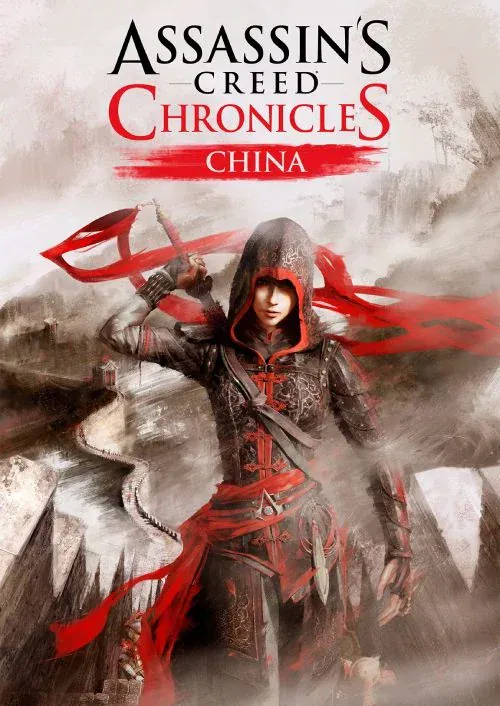
One of the aspects I appreciated most is undoubtedly its art direction. The visual style, inspired by traditional Chinese painting, makes use of environments that appear to come to life through watercolours and ink brushstrokes, giving the game a truly distinctive identity. Sixteenth-century China is portrayed through atmospheric scenery, characteristic architecture and a carefully selected colour palette that clearly distinguishes this experience from other entries in the franchise.
The gameplay also introduces some interesting ideas. Stealth is at the heart of the experience, requiring players to carefully observe enemy patrols and make effective use of cover, hiding spots and alternative routes to complete objectives without being detected. The ability to approach missions in different ways adds a reasonable degree of strategic depth, while the assassination sequences retain some of the appeal traditionally associated with the franchise. Combat, however, is considerably less convincing, with rather limited mechanics and somewhat rigid controls.
Narratively, Shao Jun's story offers an interesting opportunity to explore a historical period and an Assassin Brotherhood that received relatively little attention in the main entries. Having already been introduced in Assassin's Creed: Embers, the character deserved considerably more development. The storytelling feels somewhat superficial and fails to fully capitalise on the potential of both its protagonist and historical setting.
The main drawback, however, is a certain degree of structural repetition. Despite some promising initial ideas, missions gradually begin to feel increasingly similar, and the variety of situations is not always sufficient to maintain consistent engagement. The limited freedom of exploration, an inevitable consequence of its side-scrolling structure, also makes the experience considerably less elaborate than that of the main entries.
Overall, Assassin's Creed Chronicles: China is an interesting spin-off, particularly thanks to its distinctive visual identity and its attempt to reinterpret the franchise's traditional mechanics through a different gameplay formula. It certainly lacks the depth and ambition of the main entries, but remains an enjoyable detour for anyone interested in exploring more of the Assassin's Creed universe and willing to embrace its smaller, more experimental nature.