
Action · Adventure · Open World · Stealth · Third Person
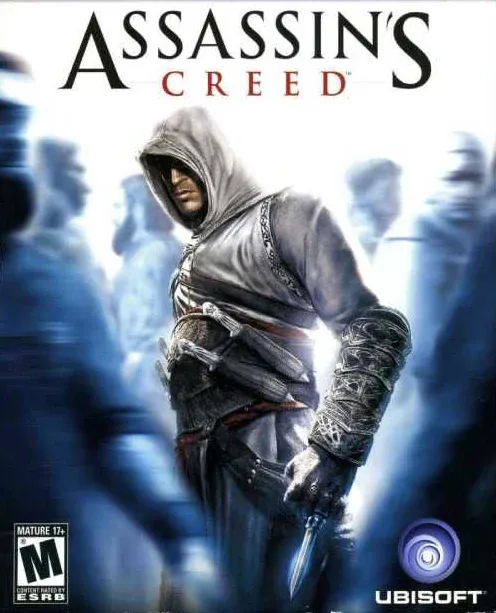
Assassin's Creed
2008 · Ubisoft MontrealUbisoft Connect
Experience the origins of the Assassin's Creed franchise. Become Altaïr, an elite Assassin navigating the Holy Land during the Third Crusade, combining stealth, parkour and deadly precision in a historical adventure.
- My rating
- 7.2/10
- Status
- Completed
- Completion
- Main story + side quests
- Playtime
- 21 h
My take
Personal review of Assassin's Creed
Assassin's Creed is one of those games that, regardless of its shortcomings, holds an important place in video game history. The first installment in Ubisoft's iconic franchise was an ambitious experiment that introduced a distinctive identity and gameplay formula that would go on to influence the industry for years to come.
The setting during the Third Crusade is arguably one of the game's greatest strengths. Jerusalem, Damascus and Acre are recreated with impressive attention to detail, delivering an incredibly atmospheric medieval experience. Exploring these cities, climbing their buildings and navigating rooftops through the parkour system felt genuinely revolutionary at the time. Even today, despite its technical limitations, the game's art direction and world design remain impressive.
The narrative is another particularly interesting aspect. Altaïr's journey, beginning with his arrogance and inability to acknowledge his mistakes, gradually develops into a compelling story of redemption. The narrative structure, which alternates between historical events and Desmond Miles' modern-day storyline, also introduces a mythology that would become one of the franchise's defining characteristics. The conversations with assassination targets are especially noteworthy, adding philosophical depth to the story by challenging the protagonist's beliefs and questioning the very nature of his actions.
Unfortunately, the gameplay is where the most significant shortcomings become apparent. The mission structure quickly becomes repetitive, requiring players to complete similar investigation activities before reaching each assassination target. This severely affects the overall pacing. Combat, while initially engaging, eventually becomes predictable and overly forgiving, relying heavily on counterattacks. The variety of side activities is also quite limited.
Despite these flaws, I consider Assassin's Creed an essential game, particularly because of what it represents and the foundations it established. It is certainly not without its problems, and several of its mechanics have aged poorly, but its identity, narrative and especially its historical setting remain remarkably compelling. An excellent starting point for a franchise that would reach even greater heights with its subsequent installments.